

Infinite video generation meets social media
OpenAI’s Sora 2 app dominates social media charts with its video generation capabilities, raising questions about copyright, creator economies, and the distinction between synthetic content and reality.

Joel Miller
OpenAI released Sora 2 this week as both an upgraded video model and an iOS social app, complete with a TikTok-style feed. By today, despite being invite-only, the Sora app has hit number one on the US App Store. It ships with watermarks and C2PA metadata on every video, plus a Cameo feature to include personal likenesses, requiring users to record verification phrases before anyone can insert them into content. Early access is US and Canada only, with OpenAI stating they will have to reduce generation limits as adoption grows. There’s a higher-quality Sora 2 Pro coming for premium users, and most of the examples we’ve seen filling our feeds likely showcase Pro. The synthetic media landscape is starting to evolve quickly. Meta recently launched Vibes, a synthetic AI-only video feed inside its Meta AI app. Google’s Veo 3 now supports vertical formats at roughly $0.40 per second, down from $0.75 and xAI’s Grok Imagine offers a “spicy” mode for subscribers.
From a technical perspective Sora 2 uses a video diffusion transformer architecture. The model starts with random static, then gradually refines it into coherent video frames by predicting what should appear at each step. A transformer processes these frames as chunks of spacetime information, similar to how language models handle words, but operating across both space and time simultaneously. It generates clips at 1080p with synchronised audio, including dialogue and sound effects. The model can specify camera angles, shot types and maintains object permanence across frames. Claims about physics understanding appear overstated. Early tests show motion that’s “more video game than reality,” impressive but not physically accurate in the way OpenAI’s marketing suggests.
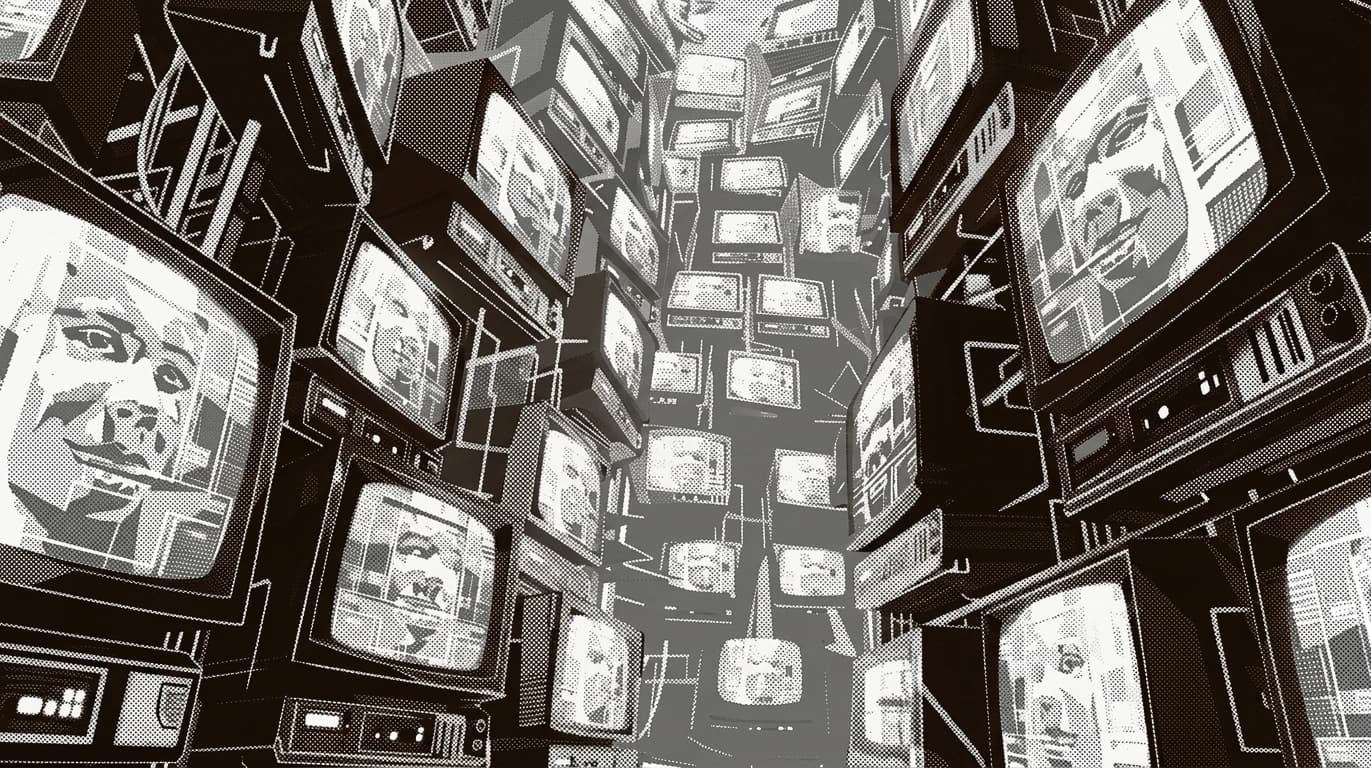
But what exactly is Sora 2 for? The answer depends on who you ask. OpenAI frames it as progress toward world models, general intelligence and even scientific simulation. Fans find it hugely entertaining. Sceptics see it as social media “slop” platform with more attention lock-in and the Cameo system causing people to disconnect from reality to an ever-greater extent. Studios view it as an automation tool in a year where many entertainment executives are cutting jobs. Copyright holders will be speaking to their lawyers. Will this new flood of synthetic content break social media? Probably not; social feeds already contain infinite scrollable material… you can’t make infinity more infinite. But we may see new dynamics in the creator economies, both from the use of this technology and the changing perception of consumers. AI-generated videos will excel in paid advertising where the goal is click-through rate, not sustained engagement. Marketers may find synthetic content generates effective hooks for Meta and TikTok ads whilst the same clips fail in organic feeds that reward watch time over immediate clicks. The economics favour agencies optimising for attention capture rather than retention.
What we’ve seen less of in the products and in the discourse is exploration of how AI can become an effective knowledge communication tool. Quickly visualising complex ideas in three dimensions with narration could extend how we explain many concepts. The proposed Sora 2 API could facilitate all manner of new tools for visualisation.
OpenAI’s control mechanisms show some degree of thought. Age restrictions on infinite scroll, wellbeing prompts, classification filters, mandatory watermarks. Yet open-source models with similar capabilities will soon emerge. The controls create short-term friction but won’t prevent proliferation. Synthetic content is only set to increase in quality, length (although this remains the real technical barrier), creative and malicious use and unpredictable disruption of our information landscape.
Takeaways: Sora 2 represents mature short-form consumer friendly video generation, and this is no longer just a research demo or even pro tool. There are some mechanisms to enable a degree of controlled use, but these are not intrinsic to the medium. This nascent infrastructure supporting discrete, watermarked files will ultimately be overtaken especially as models move toward streaming and on-device or open generation. The age of zero trust digital content is well and truly here, let’s hope we can use this to communicate without limits, not manipulate.