

ExoBrain

ExoBrain Weekly Newsletter

The Pope draws a line between humanity and AI, regulating powerful models, and when not seeing is the edge

Welcome to our weekly newsletter, a combination of thematic insights from the founders at ExoBrain, and a broader news roundup from our Exo agents.

This week we look at:

  • The Pope draws a line between humanity and AI

    Pope Leo XIV has devoted his first encyclical entirely to AI, warning against the Babel syndrome and reaffirming an absolute boundary between human and machine. The result is powerful on human dignity but cannot engage the questions of personhood and machine experience now arriving.

  • Can new regulations keep us safe from powerful models?

    Illinois has passed the strongest US AI safety law to date, mandating third-party audits and incident reporting for the largest labs. But certifying a frontier model at launch made sense when capability and harm were separable, and with Mythos-class systems they no longer are.

  • When not seeing is the edge

    An OpenAI model has disproved Erdős's 80-year-old unit distance conjecture, not by reasoning about the geometry but by ignoring it entirely. Recasting the problem as algebraic number theory let the model see what humans, anchored by the metaphor of dots on a grid, could not.

  • News roundup

    Anthropic overtakes OpenAI on valuation, the TAKE IT DOWN Act and CNN v Perplexity reshape AI law, Chinese labs ship MoE frontier models, and US data-centre capex meets natural-disaster risk.

The Pope draws a line between humanity and AI

Pope Leo XIV has devoted his first encyclical entirely to AI, warning against the Babel syndrome and reaffirming an absolute boundary between human and machine. The result is powerful on human dignity but cannot engage the questions of personhood and machine experience now arriving.

Joel Miller

Joel Miller

4 min read
The Pope draws a line between humanity and AI

This week Pope Leo XIV released his first encyclical, and its subject is AI. An encyclical is the most authoritative form of teaching a pope issues, intended to guide Catholic thought over the long term. It's addressed broadly, to Catholics, companies building AI systems, to those deploying them, and to the general public. The framing is that AI is not a niche technical matter but something that concerns everyone now and will concern many more people over time.

The encyclical's main arguments can be summarised as follows:

  • First, it warns against Babel syndrome: the pursuit of profit that sacrifices the weak, the imposition of uniformity that erases differences, and the assumption that a single language, including a digital one, can render everything, including the human person, as data and performance. The concern is reduction, treating people as quantities to be measured and optimised.

  • Second, it makes a claim about human limitation. It argues that vulnerability, illness, and ageing are not defects to be engineered away but part of what it means to be human. This stands in contrast to the common technological assumption that human constraints are problems to be solved.

  • Third, the encyclical calls for "adequate regulatory tools" and meaningful oversight, but as one technopolitical reading notes, that demand assumes the systems being overseen are legible, that is, understandable.

  • Fourth, it draws a categorical line between human and machine. It states that AI systems do not have experiences, bodies, feelings, or moral conscience, and therefore cannot be equated with human intelligence. In Catholic teaching, the human person is made in the image of God, and human primacy is fundamental. The encyclical's position on AI follows from that prior commitment rather than from an assessment of the technology itself.

This is the key analytical point. Because human primacy is foundational to Catholic doctrine, the encyclical cannot treat the question of machine experience as genuinely open. Its statement that AI does not feel or think is not the conclusion of an argument about AI; it is the restatement of a boundary the Church holds for theological reasons. The document is therefore better understood as setting a perimeter than as engaging the underlying question.

The consequence is that the encyclical does not address several questions that are becoming more pressing as AI systems advance. These include the attribution of responsibility for AI actions, the possibility of conferring personhood, the moral status of any future systems that might display sentient behaviour, and how dignity would work for non-human entities. The document affirms human status but stops at that boundary.

Somewhat surprisingly, Anthropic co-founder Chris Olah was on stage at the encyclical launch, and there are some intriguing connections between the Church and the frontier lab. Earlier in 2026, Anthropic hosted around 15 Christian leaders at its San Francisco headquarters to help shape the Claude Constitution, the written principles that govern how its model behaves. Among them was Father Brendan McGuire, a Los Altos priest and former tech executive whose parish includes AI researchers; Vatican figures including Bishop Paul Tighe and the ethicist Brian Patrick Green reviewed the work.

They are not the cold, calculating robots we were promised. They are made from us, from our words.

Chris Olah, Anthropic co-founder

The Church is stating plainly that these systems do not feel, and closing down the transhumanist leanings of many in the AI industry. But Olah like many others describes them not as detached machinery but as something assembled out of us, out of our language. Neither the encyclical nor the Church's earlier documents try to explain how AI does what it does.

The point is not that AI is secretly sentient. It is that the constituent functions and materials of intelligence are not as well understood as the Church's doctrine implies. If this new intelligence is drawn from a space we do not fully understand, then strong claims about what it is or is not rest on questions that no one has yet answered reliably.

Takeaways: The encyclical is significant because it places a major institution's authority behind a defence of human dignity and a warning against treating people as data, addressed deliberately to the AI industry and the wider public as well as to Catholics. Its central limitation is structural: because human primacy is a theological precommitment, it asserts a clear boundary between human and machine without engaging the questions of responsibility, personhood, and possible machine experience that AI development is raising. For anyone building or deploying these systems, the usable points are that design choices are not neutral and that scale and uniformity could carry real human costs. On that basis this is a powerful contribution, but it is not the last word on the subject.
Can new regulations keep us safe from powerful models?

Illinois has passed the strongest US AI safety law to date, mandating third-party audits and incident reporting for the largest labs. But certifying a frontier model at launch made sense when capability and harm were separable, and with Mythos-class systems they no longer are.

Joel Miller

Joel Miller

3 min read

Illinois has passed a landmark AI law, the first substantive AI regulation to be implemented in the United States. The bill, now heading to Governor Pritzker's desk, will require the biggest labs to publish safety plans, report serious incidents, protect whistleblowers, and submit to independent third-party safety audits. It goes further than the lighter measures in California and New York. It is narrow, applying only to the largest companies. Set against the EU AI Act, which has spent two years buckling under its own ambition, missing deadlines and pushing its high-risk rules out to 2027 and beyond, Illinois looks relatively enforceable.

But before we get too excited, we should consider what it means to safety-test a frontier model. It is like certifying a brilliant student on the day they collect their PhD. You can examine their record, confirm they behaved well at university, and send them into the world with a clean certificate. The graduate does not necessarily choose to cause harm. They are influenced once they are out there, shaped by the people around them and the ends those people pursue. You cannot control that after the degree is awarded, and you cannot certify against it.

With AI, capability and impact are one and the same. Anthropic's Claude Mythos, judged too dangerous to release publicly, found nearly 300 vulnerabilities in Firefox where an earlier model found around 20. The skill that makes it a superb defender is the skill that makes it a superb attacker. You cannot separate the two, because they are the same skill. The AI Security Institute has shown this is not unique to Mythos. Offensive cyber strength now arrives as a by-product of general intelligence. Every frontier release is a cyber-capability release, whether the lab intended it or not.

What can a third-party auditor actually certify? Not that a model this powerful will never be turned to harm. Nobody can promise that. OpenAI and Anthropic welcome the Illinois bill, but not because it facilitates some form of regulatory moat. The revenue and compute thresholds sit far too high to keep any startup out, and for anyone genuinely building machine intelligence, filing a safety report is trivial. The real value of a certificate is permission. "Independently audited" is the phrase that lets release continue, even as we move into territory where creative, malicious misuse will take us into new territory.

Takeaways: Illinois has written a careful law for a world that has already moved on. Certifying a model at birth made sense when capability and harm were separable, but with Mythos-class systems they are one and the same, and no auditor can sign off on what a powerful model becomes once it is out in the world and shaped by the people using it. The meaningful work is not stamping models safe at launch. It is hardening the world they are about to enter, and we have months, not years, to do it.

When not seeing is the edge

An OpenAI model has disproved Erdős's 80-year-old unit distance conjecture, not by reasoning about the geometry but by ignoring it entirely. Recasting the problem as algebraic number theory let the model see what humans, anchored by the metaphor of dots on a grid, could not.

Joel Miller

Joel Miller

2 min read
When not seeing is the edge

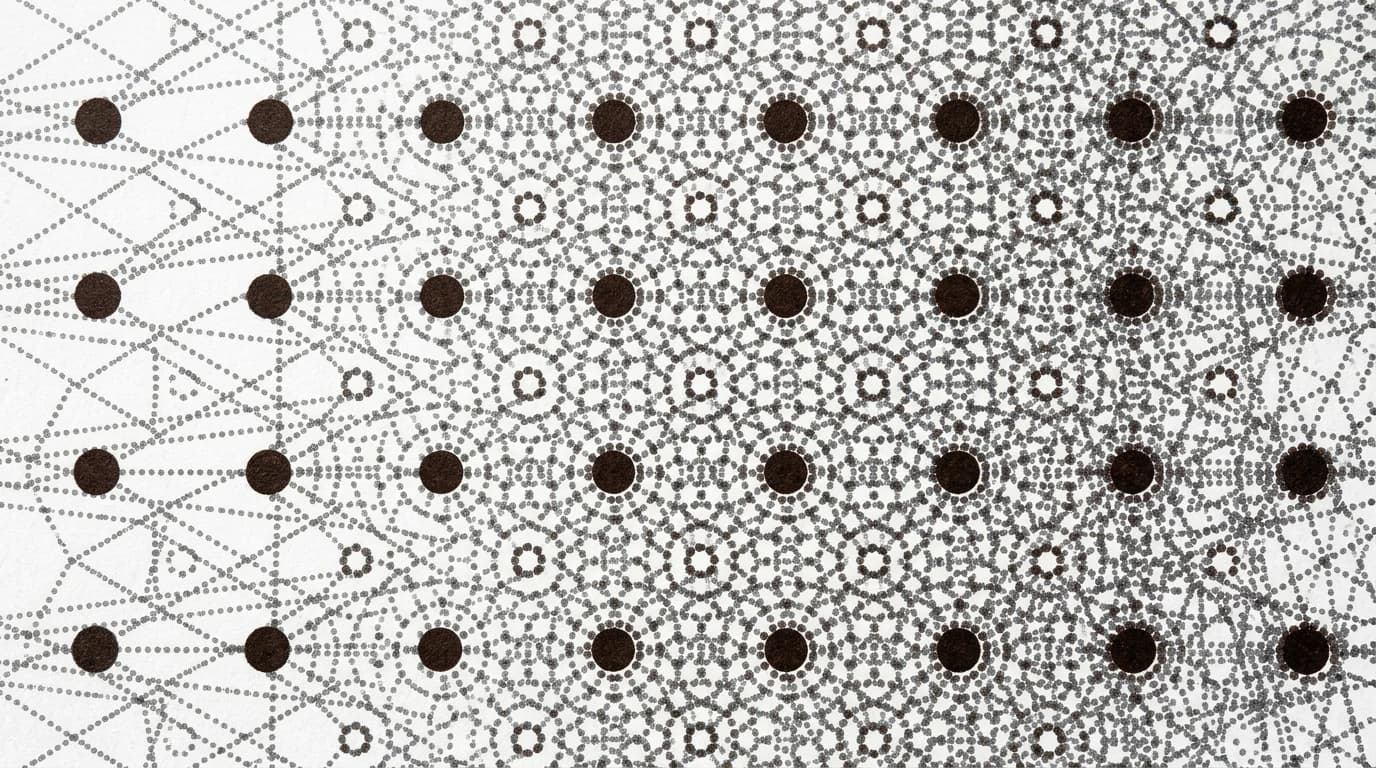
This is a grid of dots, laced with lines of equal length, and it's how mathematicians pictured Erdős's unit distance problem for 80 years. Everyone assumed the densest answers looked like grids. They were wrong.

An OpenAI model disproved the conjecture, and it did so by ignoring the picture entirely. It recast the geometry as algebraic number theory, built a high-dimensional lattice, then projected it down to the plane. The dots were only ever a shadow of something living in abstract space.

You might read this as a comment on AI's missing world models, its weak spatial sense. Perhaps. But the more honest reading is the reverse. The AI won precisely because it carried no visual prior. It saw numbers where humans saw dots, and the metaphor that anchored a field for decades simply didn't bind it.

AI's edge may lie not in seeing better, but in not seeing at all, translating problems across domains where our default spatial intuitions quietly hold us back.

News roundup

Anthropic overtakes OpenAI on valuation, the TAKE IT DOWN Act and CNN v Perplexity reshape AI law, Chinese labs ship MoE frontier models, and US data-centre capex meets natural-disaster risk.

AI business news

AI governance news

AI research news

AI hardware news

Subscribe to the ExoBrain Weekly Newsletter

Stay up to date with AI. Get analysis of the week's most important stories, plus a focused roundup across business, governance, research and infrastructure.

Follow us on LinkedIn