

Will AI run out of gas?
Geopolitical tensions in the Middle East threaten global helium and natural gas supplies, exposing critical vulnerabilities in the semiconductor and AI data centre supply chains.

Joel Miller
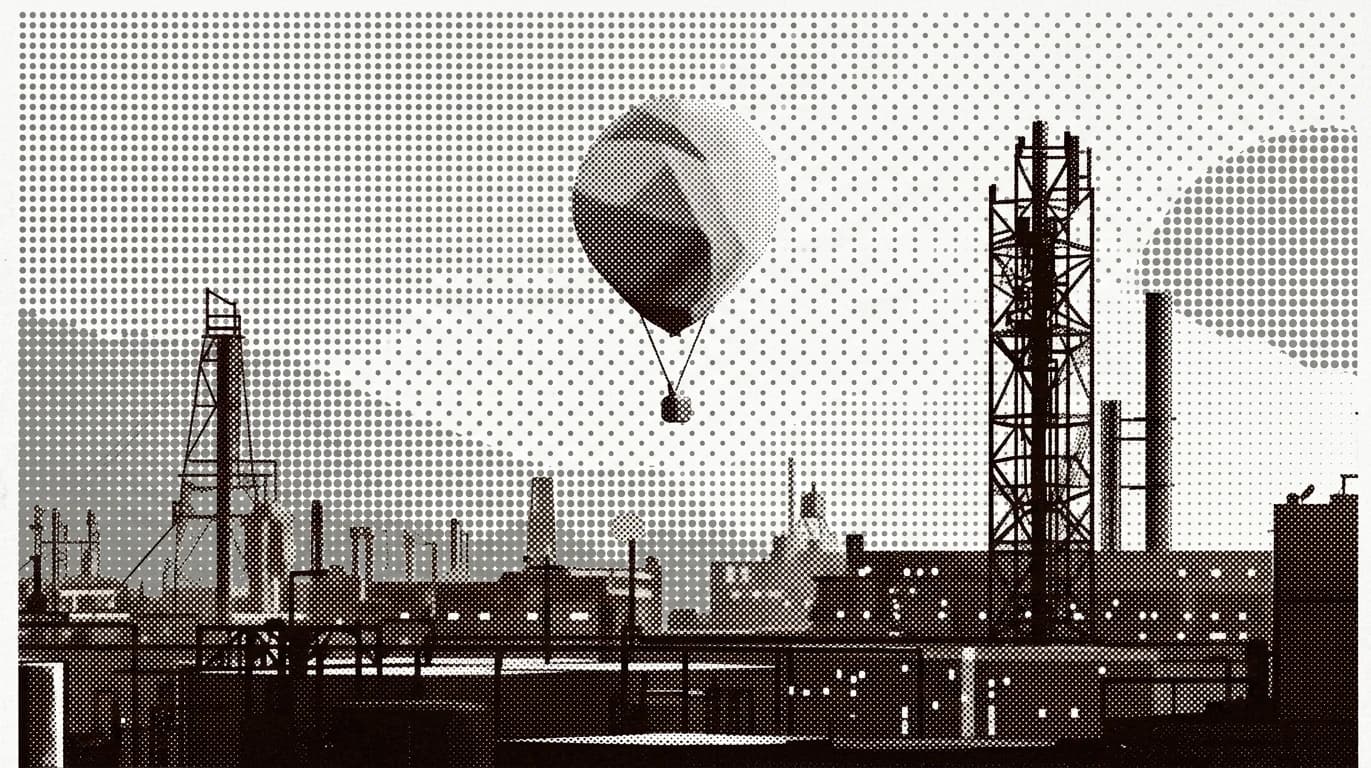
Three weeks into the war in Iran, the human cost is mounting. People are being displaced, cities are under bombardment, and the Strait of Hormuz, through which 20% of the world’s oil passes each day, has become highly contested. Our thoughts are with those caught in the violence. But as the crisis unfolds, it is exposing something the AI industry has been slow to confront: the current boom runs on gas, and its supply is now under severe threat. This is not metaphorical gas, but actual gas.
Helium is one of the most critical industrial gases on Earth. Semiconductor fabrication at the cutting edge, the sub-5-nanometre processes used by TSMC to produce every Nvidia AI accelerator and every Apple processor, requires ultra-pure helium for wafer cooling during lithography and for leak detection. Without it, the fabs shut down. Qatar is the world’s second-largest helium producer, supplying a third of global output, some 63 million cubic metres in 2025. When Qatar’s Ras Laffan facility, the world’s largest LNG plant, declared force majeure at the start of the conflict on February 28, it removed 5.2 million cubic metres of helium from the global market every month. Prices have already doubled.
What makes helium uniquely vulnerable is its physics. It is the second lightest element in the universe. Its molecules are so small they can escape even the most sophisticated storage systems. It has the lowest freezing point of any element, just four degrees above absolute zero, so it cannot be easily liquefied for transport. The global supply chain operates on roughly 45 days of buffer before existing inventory boils off. You cannot stockpile helium for a rainy day. If disruption lasts 60 to 90 days, prices could surge another 25-50%, potentially exceeding $2,000 per thousand cubic feet, more than four times pre-war levels. South Korea sources 65% of its helium from Qatar. Taiwan is similarly exposed. TSMC says operations are normal “for now,” but Fitch Ratings warned of “rising tail risk” and Tom’s Hardware put the chip supply chain “on a two-week clock” back on March 11.
There is some resilience built in. The US is the world’s largest helium producer. Algeria and Russia produce meaningful volumes. Air Liquide operates an underground storage facility in Germany with a capacity of 47 million cubic metres per year. Leading-edge fabs can recycle 80-90% of their helium. But Fitch have noted that chipmakers may be forced to prioritise high-margin AI chips over everything else, which would squeeze consumer electronics and automotive sectors to keep the AI supply chain alive.
Natural gas generated 40% of US electricity in 2025, making it the single largest power source in the US. And a rapidly growing share of that electricity flows straight into AI data centres. Gas-fired projects directly linked to US data centres have surged 25-fold in just two years, with over a third of all new US gas demand now driven by data centres. Elon Musk’s xAI operates Colossus, the world’s first gigawatt-class AI data centre, in Memphis, Tennessee, running on gas turbines. The backbone of the AI inference boom is natural gas, likely >50% of all US inference is gas-powered and that is set to rise to >60% as new builds come online.
The US is technically self-sufficient in gas thanks to the shale revolution. But self-sufficiency and price insulation are not the same thing. Gas is a global commodity. When Qatar’s LNG exports go offline, and Qatar supplied a fifth of the world’s LNG, European and Asian buyers scramble for alternatives. US producers see international prices spike and look to export more. Domestic prices follow. WTI crude has surged 40% since the war began, exceeding $100 a barrel. Dutch TTF gas prices are up 50-60%. US gasoline costs have risen 17%. These translate directly into higher operating costs for every data centre in America, and every AI inference call those data centres serve.
So what does this mean for the trajectory of AI? In the short term, the impact is somewhat manageable because helium buffers can hold for a few more weeks and US gas supply is robust even as prices climb. But the AI industry has built its future on 20th-century energy and materials infrastructure, and that infrastructure passes through some of the most geopolitically exposed corridors on Earth. The mechanisms for resilience exist but need activating. Helium recycling rates at leading fabs already reach 80-90%, and supply diversification towards the US, Algeria and Russia is underway. On the energy side, the push for nuclear and renewables for data centres has never looked more urgent. But for every organisation that depends on AI, and that is increasingly all of us, the real message from the Iran war is about concentration risk: chip fabrication in Taiwan, helium in Qatar, energy in fossil fuels, and AI compute in a handful of hyperscaler clouds. Too many eggs in too few baskets.
Takeaways: The Iran war is a huge stress test for the AI supply chain, and it is revealing how deeply it depends on physical resources. For businesses and technologists building AI resilience plans, the playbook is diversification: local inference on capable open-weight models that can run on modest hardware; multi-cloud and on-premises strategies that reduce dependency on any single provider or region; and a hard, honest look at the energy assumptions underpinning your AI strategy. The future of AI is not just about scaling LLMs. It is about whether gas keeps flowing.