

Wayve takes a billion-dollar step towards embodying AI
Autonomous vehicle startup Wayve secures $1.05 billion in funding to develop end-to-end AI driving systems, competing with established players like Tesla and Waymo in the race for full autonomy.

Joel Miller
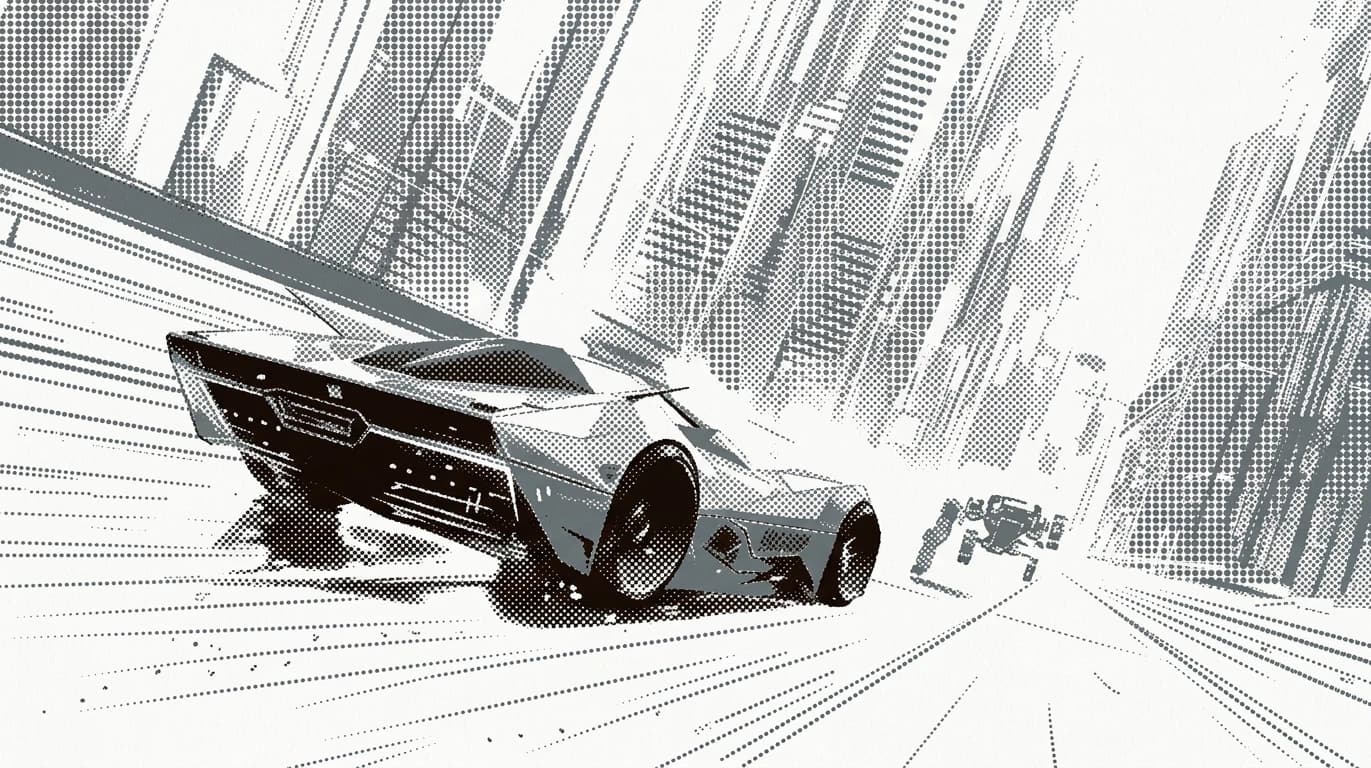
Wayve, a UK-based autonomous vehicle (AV) startup, has just raised $1.05 billion in Series C funding, joining a select group of deep-tech unicorns that hail from these shores. This is significant news for the whole UK ecosystem, with PM Rishi Sunak expressing how “incredibly proud” he was of the investment. So, what makes Wayve special enough to secure one of the biggest funding injections of any AI firm outside of the likes of OpenAI and Anthropic?
Wayve are at the forefront of research on what’s called AV2.0 or the second generation of autonomous vehicle technologies. They use large neural nets, vision, and language models to help machines understand the world around them and take actions. Their latest on-board driving systems work in an ‘end-to-end’ way, directly mapping sensor inputs to driving outputs, via a large malleable AI model that runs all the capabilities once dealt with by many independent and inflexible subsystems. This end-to-end and trainable approach allows their system to adapt quickly to new environments and vehicles, making it efficient and scalable.
Wayve has also recently introduced something they call a ‘vision-language-action’ model that can understand sensor data and verbalise its driving and decision-making processes. They see this as a step towards building trust and transparency in autonomous vehicles, which will be crucial for full public acceptance. Wayve also use an advanced simulation environment called Ghost Gym to test and refine their systems. By generating synthetic data that covers a wide range of road use scenarios they can validate before testing on real vehicles. This is all being made possible by the convergence of ‘software-defined’ cars, advanced sensing, synthetic data, and of course- the power of (on-board) compute from none other than Nvidia.
Wayve reportedly garnered interest from automakers but opted for sector independence although they’re working with brands such as Jaguar and Ford. They believe the best AI will be built with data gathered from across the industry. CEO and co-founder of Wayve, Alex Kendall, explained that the funding will be used to curate and generate data and train ever more powerful models that deliver AI “we can trust to physically interact with us in the world”, but in the first instance to fully realise a product for the automotive market, although he is hesitant to give timelines.
Tesla, once the undisputed leader in electric and autonomous vehicles, is also exploring working with other automakers and licensing their Full Self-Driving (FSD). However, Tesla has had its share of challenges lately. FSD has had a chequered history, not least because it is not by any means a ‘full self-driving’ system. For many years it took an alternative route to Wayve and did not use deep learning beyond its image recognition functionality. But a switch to an end-to-end AI approach has seen it make significant strides of late.
Google’s Waymo spin-off continues to demonstrate impressive utility with its 250+ fleet of robo taxis operating in various US cities. At $200,000+ per vehicle, they are not yet commercially viable for mass adoption but have logged 7+ million miles in real-world conditions. They operate at level 4 autonomy, meaning they can handle most driving situations without human intervention, although they are still restricted to pre-defined geographical areas. For reference, level 1 is the kind of light assistance most of us have in our cars today and level 2 provides partial automation with the driver needing to remain engaged at all times (“FSD” is level 2 hence the controversy). Level 3 would see the driver ready to take control at any time, whereas level 5 is full autonomy in all conditions.
With Tesla planning to test FSD powered robotaxis in China and companies such as GM’s Cruise and Amazon’s Zoox developing their own services, many companies are betting on the rapid growth of shared autonomous mobility, where populations will increasingly rely on on-demand self-driving vehicles rather than owning personal cars.
While the potential benefits of this could be immense – improved safety, reduced emissions, optimized land use, and more – there are still challenges to overcome. Electricity and charging infrastructure remain a huge limiting factor. And public demand, trust, and acceptance are crucial, with the regulatory landscape playing a significant role. The UK seems to be positioning itself favourably in this regard, which could give Wayve an added edge. The Automated Vehicles Bill completed its journey through parliament this week, and is shaping the frameworks necessary for the marketing, insurance, safety, data sharing, and cyber security of self-driving systems.
Longer-term both Tesla and Wayve are working towards a vision of widespread ‘embodied AI’. They imagine a continuum from uses in AVs into other complex physical scenarios. The implications of embodied AI extend far beyond our transport systems. Tesla’s Optimus humanoid line was this week seen showing off its 22 degrees of freedom finger dexterity (5 short of a human’s 27), and Musk hopes it will be on sale by year end. Wayve’s platform for simulating, teaching, learning, explaining, and acting could be applied to many scenarios. From industrial robotics to healthcare assistants and space exploration, the full potential of embodied AI lies in its ability to enable machines to perceive, understand, and interact with the physical world in increasingly sophisticated ways ultimately reshaping our relationship with technology in every aspect of life.
Wayve’s $1 billion funding round is another indicator of the progress being made in AI applications beyond the chatbot. It’s also an indicator of commercial potential big tech firms see in taking a slice of a transportation pie that’s forecast to grow to $6 trillion by 2030. AVs was once (what venture capitalist Steve Vassallo) termed a “zero-billion-dollar” market, a market that didn’t exist, but had immense potential. Alongside AI agents, could embodied AI be the next zero-trillion-dollar market?
Takeaways: If you want to try a level 2 ‘hands-off eyes-on’ AV legally in the UK, the first car to be approved is the Ford Mustang Mach-E (2023 model) with BlueCruise. Ford state that 95% of the country’s motorways are designated hands-free Blue Zones, where it will manage steering, acceleration, and braking (for a £17.99/month subscription fee). This looks like the shape of things to come, with level 3 ‘eyes-off’ systems slated for legal approval in the UK from 2025/26. However, Waymo are not currently planning to deploy in the UK given the progress here is still somewhat behind the US and other countries. Where might you see the Wayve technology in action? Perhaps when the Asda or Ocado shopping arrives at your door, as both supermarkets are working towards trialling Wayve’s tech in their delivery fleets.
