


In a relatively quiet week for major launches, we learnt a good deal about OpenAI’s near future, and the ongoing expansion of AI compute. In a wide-ranging livestream OpenAI CEO Sam Altman addressed the new company restructuring. OpenAI’s for-profit arm, now called OpenAI Group PBC, will be controlled by the nonprofit OpenAI Foundation. The nonprofit receives a 26% stake worth $130 billion, potentially increasing through performance warrants. Microsoft retains 27% valued at $135 billion, nearly ten times its $13.8 billion investment. The arrangement removes prior fundraising constraints and positions OpenAI for a $1 trillion plus IPO.
This wasn’t how OpenAI was supposed to work. Founded in 2015 the organisation promised to develop AI openly and safely, free from profit motives. The nonprofit structure was meant to ensure that artificial general intelligence would benefit everyone, not just shareholders. By 2019, facing the astronomical costs of AI development, they created a capped-profit subsidiary. Now the pretence has been dropped, with Microsoft’s results quarterly filing this week exposing an OpenAI loss last quarter of some $11.5 billion they need more capital.
Critics see this as perhaps Silicon Valley’s biggest heist to date. A nonprofit funded by public goodwill and academic partnerships has been converted into a vehicle for private profit. Altman frames this as essential for OpenAI’s mission. During the livestream, he emphasised that building AGI requires infrastructure investments that only private capital can provide. The $1.4 trillion commitment to data centres and computing power he announced wouldn’t be possible under nonprofit constraints. The public benefit corporation structure, he argues, balances commercial success with societal interests better than pure nonprofit or for-profit models.
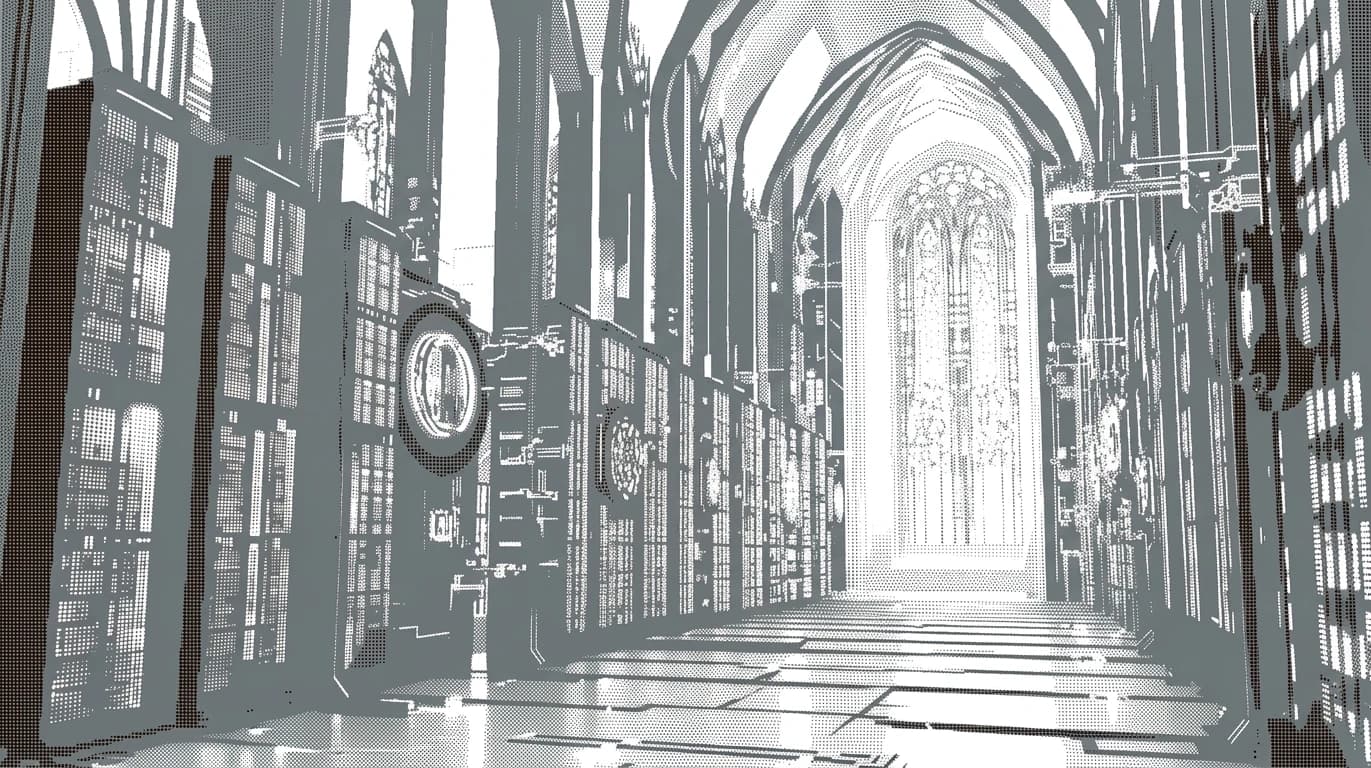
Much of the capital is earmarked for compute. Altman has set out plans to build-out 30GW of compute (six London’s worth) at an eventual cost of $1.4 trillion over 5 years. To understand the scale, consider that no country outside the US or China has more than a single GW in total today. Europe as a whole has perhaps 2GW, Asia pacific ex-China <1GW. France recently announced plans for a 1GW facility costing €30-50 billion. Saudi Arabia’s Neom Oxagon targets 1.5GW. South Korea’s Haenam cluster aims for 3GW by 2028. The UK’s Teesside AI Growth Zone hopes for 6GW by 2030. OpenAI wants to build 1GW every week and bring the cost down from $40 billion/GW to $20 billion. The growth becomes clearer when compared to the world’s most power-hungry industrial facilities. xAI’s Colossus in Memphis currently only consumes 0.35GW whilst OpenAI’s Abilene Stargate sits at around 0.24GW. At full capacity, these single data centres will match the 1.2GW Maaden aluminium smelter in Saudi Arabia or approach the 1.6GW Bahrain aluminium facility, traditionally the most energy-intensive operations on Earth. We’re now entering a phase where these planned “cathedrals of compute” are becoming fully operational following the surge in spending… Amazon this week booted up their 0.5GW Ranier facility less than one year after it was first announced (to power Claude with 500,000 custom Tranium chips). They plan to have 1,000,000 chips in place by year end.
And yet the power delivery to these single sites is still the biggest limiting factor, especially for >1GW facilities. The solution might be decentralisation: rather than single massive sites, companies could distribute training across dozens of smaller data centres near existing power plants with spare capacity, connected by high-speed fibre networks. Epoch AI calculates that a 10GW training run could be orchestrated across 23 sites spanning 4,800km, using spare capacity from gas plants between Illinois and Georgia. The network would cost $410 million, at $41 million per GW that seems extremely attractive.
Meanwhile CEO Jensen Huang kicked-off Nvidia’s October tech conference with another vision for compute expansion… reaching out what is termed the “edge”. A new partnership with Nokia for 6G networks will transform every mobile tower into a mini-data centre. The new Arc Aerial RAN Computer combines wireless communication with Grace CPUs and Blackwell GPUs, creating what Huang calls “AI on RAN,” where AI can run locally rather than phoning home to distant servers.
So, what does OpenAI envision all of this compute will power? Firstly, there was a clear indication from the livestream that despite a flurry of product releases in recent weeks such as the Atlas browser, OpenAI will focus more on building a platform for third party developers. Altman and Jakub Pachocki, OpenAI’s Chief Scientist also set out some pretty specific timelines: an AI research intern by September 2026, a legitimate autonomous AI researcher by March 2028, and systems capable of recursive self-improvement shortly after. These are their “planning assumptions”. OpenAI expects small scientific discoveries by 2026, medium to large discoveries by 2028. By 2030-2032, the implications become unpredictable. They’re not talking about better chatbots but about systems that accelerate human knowledge faster than humans can comprehend. Two hundred years of scientific progress in twenty years, or possibly two. None of the firms on the frontier of the AI race are indicating that they are about to slow down.
Takeaways: OpenAI’s transformation from nonprofit to trillion-dollar corporation represents a victory for capital requirements over founding ideals. The infrastructure battle has become existential, with nations and companies racing to control the means of intelligence production. Whether through centralised cathedrals, distributed edges, or mobile swarms, whoever controls the compute infrastructure of 2030 will largely determine humanity’s trajectory through the age of AGI.